Stock code: 601677
Stock code: 601677
When planning a project or procurement, understanding aluminum sheet size standards is crucial for ensuring efficiency, cost control, and feasibility. Selecting the right standard size guarantees reliable supply, shorter lead times, and optimal material usage. This guide breaks down the core dimensional standards and provides a practical selection methodology.
An aluminum sheet is defined by three key dimensions, which together determine its application and cost-effectiveness.
Thickness is the most critical factor. It defines the sheet’s strength and suitable applications. Thin gauges (0.2mm-2.0mm) are used for precision electronics and packaging. Medium gauges (2.0mm-6.0mm) are common for fabrication and architectural panels. Heavy gauges (6.0mm and above) suit structural parts in transport and machinery. Standard thickness series (e.g., 1.0, 2.0, 3.0, 4.0, 5.0, 6.0, 8.0, 10mm) form the basis for production and inventory.
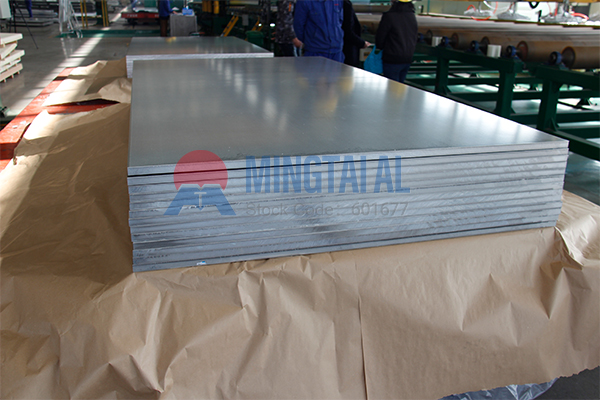
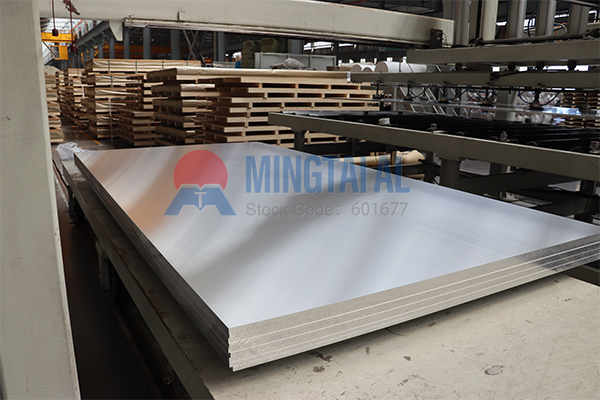
Width and Length define the sheet’s “format.” Common standard widths include 1000mm, 1220mm, 1500mm, and 2000mm. Common standard lengths include 2000mm, 2440mm, 2500mm, 3000mm, and 4000mm. Among these, 1220mm x 2440mm (equivalent to 4′ x 8′) is one of the most universally available and widely used standard sizes globally.
The table below lists some of the most readily available standard sizes. Choosing these specifications will significantly streamline your procurement.
|
Common Thickness (mm) |
Common Width (mm) |
Common Length (mm) |
Typical Application Hint |
|
0.5-1.0 |
1000, 1220 |
2000, 2440 |
Instrument panels, enclosures |
|
2.0, 2.5, 3.0 |
1220, 1500 |
2440, 3000 |
Architectural cladding, sheet metal fabrication |
|
4.0, 5.0, 6.0 |
1500, 2000 |
3000, 4000 |
Vehicle flooring, structural frames |
|
8.0, 10, 12+ |
1500, 2000+ |
3000, 4000+ |
Mold bases, large structural components |
Follow this logical selection process to avoid waste and delays.
* Mind the Tolerances: Standards cover more than just named sizes. They include strict thickness tolerances, flatness, and edge straightness. These are critical for precision. Specify requirements based on GB/T (China) or ASTM standards.
* Alloy and Temper Matter: Different alloys (e.g., 1060, 3003, 5052, 6061) and tempers (O, H, T) can influence typical available sizes. A reliable supplier can provide accurate advice for your specific material choice.
Understanding and applying aluminum sheet size standards is the foundation of efficient procurement and successful design. Opting for standard specifications ensures a smooth supply chain, cost control, and project predictability. Mingtai Aluminum maintains a large inventory of standard-size aluminum sheets in various alloys and tempers. We offer reliable quality and fast delivery, serving as your trusted raw material partner. Contact us today for detailed specification lists and technical support.
Q: What is the most readily available standard aluminum sheet size?
A: 1220mm x 2440mm (4’x8′) is the most common and widely stocked size.
Q: My design size falls between two standard sizes. What should I do?
A: Choose the next larger standard size. This is almost always more cost-effective and faster than custom, non-standard sizing.
Q: What are the main benefits of choosing standard size sheets?
A: Four key benefits: lower cost, faster delivery, consistent quality, and guaranteed supply.
Q: What standards govern aluminum sheet thickness tolerances?
A: Tolerances are typically specified per GB/T 3880 (China) or ASTM B209 (international). The relevant standard should be confirmed with your supplier.