Stock code: 601677
Stock code: 601677
Choosing the right alloy for a structural part often begins with one question: should the material be strengthened by cold work, or by heat treatment? Heat-treatable aluminum alloys—2xxx, 6xxx, and 7xxx—gain strength through solution treatment, quenching, and aging. For many applications, selecting the correct series matters more than comparing individual tempers.
The strength of these alloys comes from fine precipitates that block the movement of dislocations. The process can be simplified as: high-temperature solution treatment → rapid quenching → aging precipitation.
Temper designations record this combination. In practice, the most important ones to distinguish are:
– T6 / T651: Peak-strength temper. T651 adds stretch stress relief, making it suitable for thick plate that will be precision machined later.
– T73 / T7351: Overaged temper. Strength is slightly lower, but resistance to stress-corrosion cracking is better, making it suitable for load-bearing structures in corrosive environments.
– T4 / T42: Naturally aged temper. Formability is better, but strength is not at its peak. It suits parts that will be aged after forming.
> Choosing T6 or T73 is essentially a trade-off between peak strength and resistance to stress-corrosion cracking.
In short: 2xxx alloys use copper as their main alloying element and are built for high-temperature and fatigue-driven applications.
– High strength, suitable for structural parts under heavier loads
– Good fatigue crack growth resistance, suitable for cyclic loading
– Retains strength at elevated temperatures, an important advantage over 6xxx
– Corrosion resistance is weaker than the other two series. High copper content makes it sensitive to intergranular corrosion, so plate often needs alclad protection.
– Weldability is limited, and most grades cannot be fusion welded.
> Typical applications: aircraft structures, truck wheels, high-stress mechanical parts.
6xxx alloys use magnesium and silicon as their main alloying elements, with Mg₂Si as the strengthening precipitate. They are not the highest-strength series, but they offer a strong overall engineering balance.
1. Good corrosion resistance in many outdoor and industrial environments
2. Good weldability when matched with suitable filler materials
3. Excellent extrudability, ideal for complex architectural and industrial profiles
– The strength ceiling is lower than 2xxx and 7xxx, so high-load applications may not be suitable.
– The heat-affected zone softens after welding, so strength margins should be provided near main load-bearing welds.
> Typical applications: rail vehicle bodies, automotive body structures, architectural profiles, heat exchangers.
7xxx alloys use zinc, magnesium, and copper as their main alloying elements, giving them the highest strength among the three series. 7075-T6 is often used as a representative high-strength commercial aluminum, used in aircraft primary structures, wing spars, and fuselage frames.
– Very high ultimate strength, suitable where weight reduction and load capacity are both required
– Established use in aviation, high-end molds, and competitive sports equipment
1. Will the part be exposed to a corrosive environment for a long time?
2. Will the part carry tensile stress for a long time?
If the answer is yes, T6 may not be the most reliable choice. T73 or T7351 is often worth evaluating first, with the trade-off of somewhat lower strength. Grades such as 7050 and 7085 improve the balance of through-thickness hardenability and toughness, making them suitable for large integral structural parts.
> Typical applications: aircraft primary structures, high-end molds, competitive sports equipment.
|
Dimension |
2xxx |
6xxx |
7xxx |
|
Strength ceiling |
High |
Medium-high |
Very high |
|
Corrosion resistance |
Poor, often needs alclad |
Good |
Moderate, improved by T73 |
|
Weldability |
Poor |
Good |
Poor |
|
Extrudability |
Poor |
Excellent |
Poor |
|
Fatigue performance |
Excellent |
Moderate |
Excellent, but toughness limited |
|
Typical use |
Aircraft structures, high-temperature use |
General structures, extruded profiles |
Maximum strength, aircraft primary structures |
Three questions can guide the selection:
1. How high is the load?
2. How corrosive is the environment?
3. Is welding or extrusion required?
If the load is not high and welding or extrusion is needed, look first at 6xxx. If the load is high, welding is not the main concern, and fatigue performance matters, consider 2xxx. If the load is extremely high and poorer weldability and toughness are acceptable, then evaluate 7xxx, and choose T6 or T73 according to the corrosion conditions.
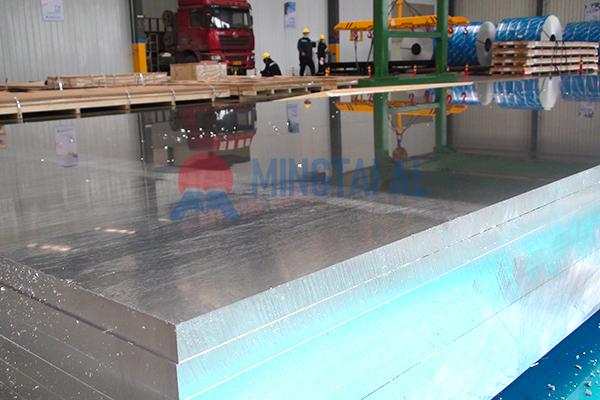
These alloys are usually supplied in a T temper or O temper. We mainly supply rolled aluminum plate and coil, and we do not provide surface treatment or downstream machining services. If a part requires anodizing, painting, or precision cutting, those steps need to be arranged separately.
If you are evaluating 2xxx, 6xxx, or 7xxx plate or coil for a specific application, Mingtai Aluminum can provide rolled supply and temper-matching recommendations. For projects involving heat-treatable aluminum alloys, we welcome further discussion on thickness, width, and required temper.
Q: Which series has the highest strength?
A: 7xxx generally offers the highest strength, but toughness and corrosion resistance often require a trade-off.
Q: How do I choose between 6061 and 7075?
A: Choose 6061 for welding, corrosion resistance, or complex extrusions; choose 7075 when maximum strength matters more than weldability.
Q: What is the difference between T6 and T73?
A: T6 is a peak-strength temper, while T73 is overaged for better resistance to stress-corrosion cracking.
Q: Do these alloy plates need additional heat treatment?
A: Usually not, because the supplied temper is already the final T condition; re-solution treatment and aging are only considered after forming or welding.